For deep-tech hardware teams · Denmark

Precision hardware, from prototype to product.

You have something that works. Now it has to be built by people who weren't there when it was invented — from a drawing, repeatably, against a schedule set before anyone knew where the hard part would be.

That crossing is what I do. Ten years across gas, motion and deposition systems, and the engineering groups that build them.

Portrait of Vitalii Balitskyi, System Engineering Lead
V. BalitskyiGreve, DK
10+
Years in hardware
3
Platforms industrialised
11
Publications

How I help

Stage 01

Requirements and design review

Before you commit to tooling, a supplier or a design freeze: what does done actually mean for this machine? Often nobody has written it down. I define the requirements — performance, environment, manufacture, acceptance — and review the design against them.

Requirements · Architecture · Risk review
Stage 02

Prototype to production

It works when you build it. Now it has to work when someone else does — from a drawing, to the requirements you agreed, repeatably. Component selection, supplier qualification, drawing packages, assembly and acceptance procedures: the work that makes unit one and unit fifty behave the same way.

Design for manufacture · Scale-up · Supplier hand-off

Stage 03

The engineering practice

Getting one machine across is a project. Getting every machine across is a practice: design reviews that catch things early, documentation someone else can pick up, an engineering group that makes the same call twice.

Design review · Mentoring · Documentation

Working together

Start with a call. Half an hour, no charge and no obligation — you describe what you are building and where it is stuck, and I tell you whether I can help. If I am not the right person, I will say so on that call rather than three weeks into an engagement.

Tell me what you're building

About

I've spent my career at the intersection of advanced materials science and precision engineering — the narrow space where a process that works on a bench needs to survive the realities of production volume, thermal drift, and a ticking clock.

That work started in Kyiv, building instrumentation for materials research and scaling laboratory chemistry into industrial equipment. It continues in Denmark, where I lead the mechanical engineering group at ATLANT 3D and have taken the same core atomic layer processing technology to product.

Location
Greve, Denmark
Focus Areas
Atomic-layer deposition · MXene synthesis · Precision mechatronics · Industrial scale-up
Education
MEng & BEng, Kyiv Polytechnic Institute

Selected projects

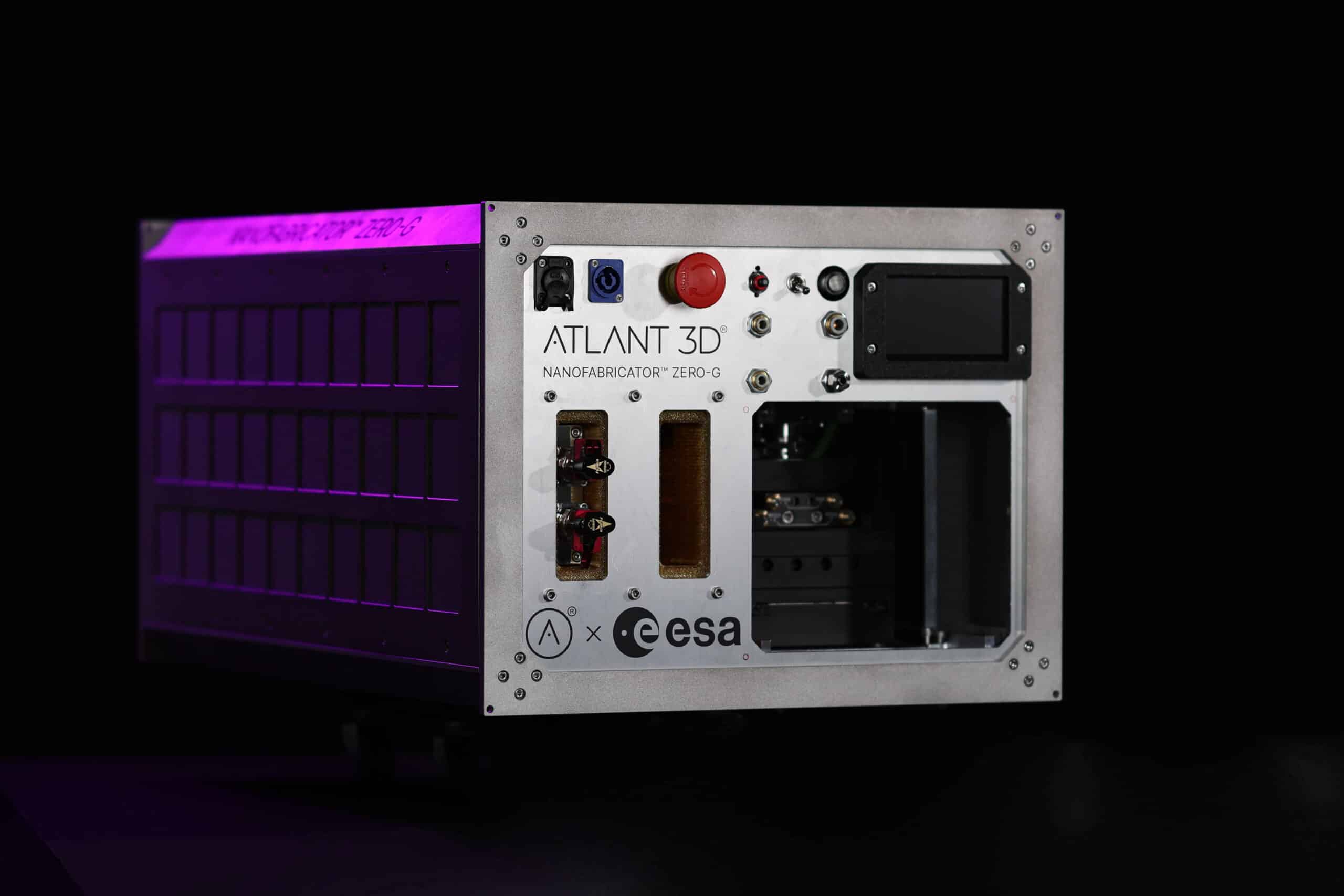
NANOFABRICATOR® Zero-G

NANOFABRICATOR® Zero-G

ATLANT 3D · atomic layer processing for in-space manufacturing

Problem
The technology was developed and proven on the ground, on a bench. Putting it in orbit meant transferring it whole into a different environment, under a different set of rules.
My role
Led the mechanical design of the space-adapted system, working to space-qualification and crewed-platform requirements including compatibility with the ISS European Drawer Rack (EDR2). Owned component selection, assembly and test.
Outcome
A ground-based process adapted to run in microgravity, inside a crew-rated envelope, to fixed space-qualification requirements.
  • Space Hardware
  • Requirements Engineering
  • Precision Mechanics
ATLANT 3D product page
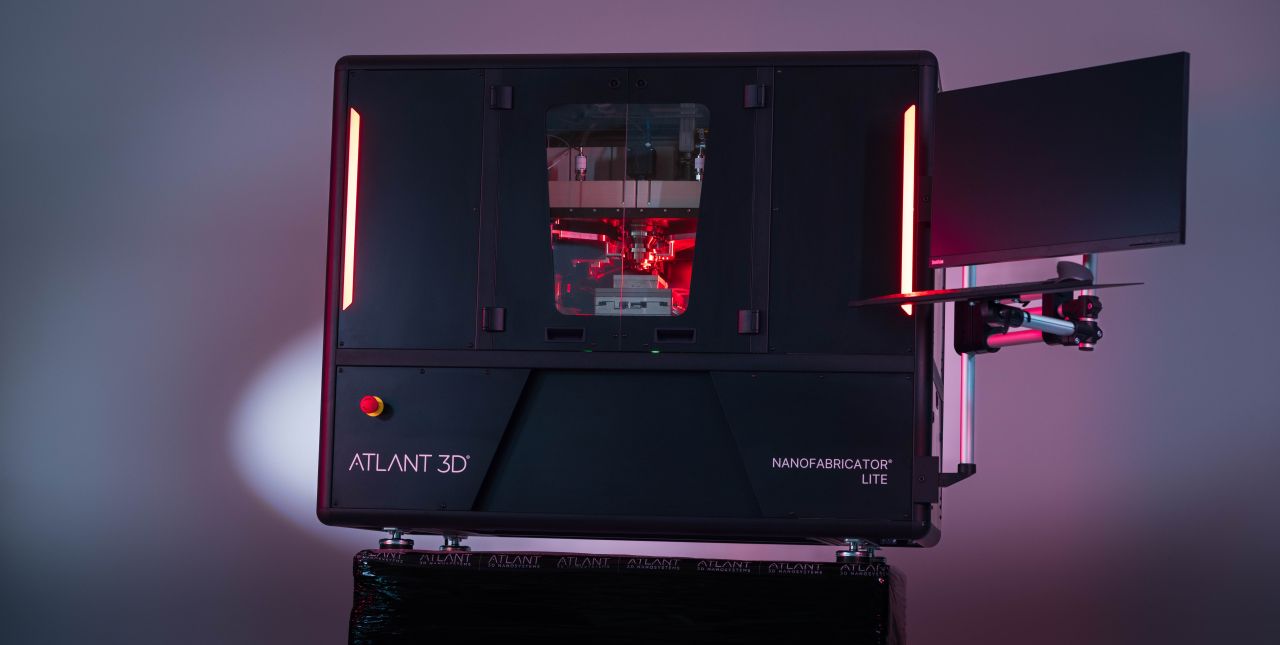
NANOFABRICATOR™ Lite

NANOFABRICATOR™ Lite

ATLANT 3D · benchtop tool for atomic-scale fabrication

Problem
The benchtop tool existed as a hand-built research instrument. To be sold and supported it had to become something that could be manufactured repeatably by people who had not designed it.
My role
Led the mechanical design and owned the transfer out of R&D into production — component selection, supplier collaboration and qualification, and hands-on assembly and testing.
Outcome
The tool moved from research build to a manufacturable product, with the drawing package, supplier base and assembly process to support it.
  • Design for Manufacture
  • Production Transfer
  • Supplier Qualification
ATLANT 3D product page
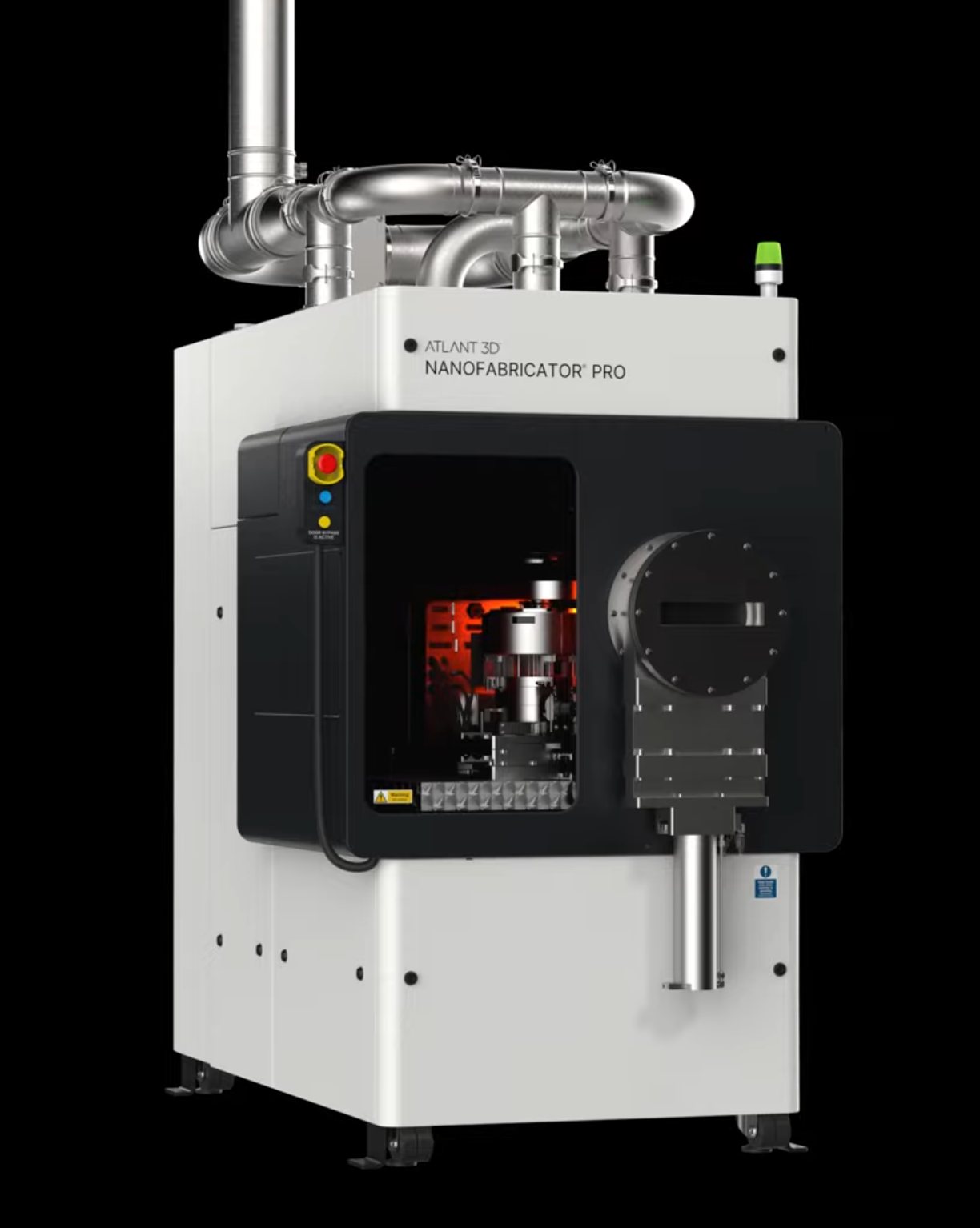
NANOFABRICATOR® PRO

NANOFABRICATOR® PRO

ATLANT 3D · industrial platform for AI-driven materials discovery

Problem
The industrial platform had to be designed for build by an external manufacturing partner — which means the design has to be complete and unambiguous enough to hand to another company.
My role
Contributed mechanical design and managed requirements in collaboration with manufacturing partner Automated Industrial Robotics, taking the platform from specification to buildable design.
Outcome
Launched August 2026.
  • Requirements Management
  • External Partners
  • Industrial Systems
ATLANT 3D product page
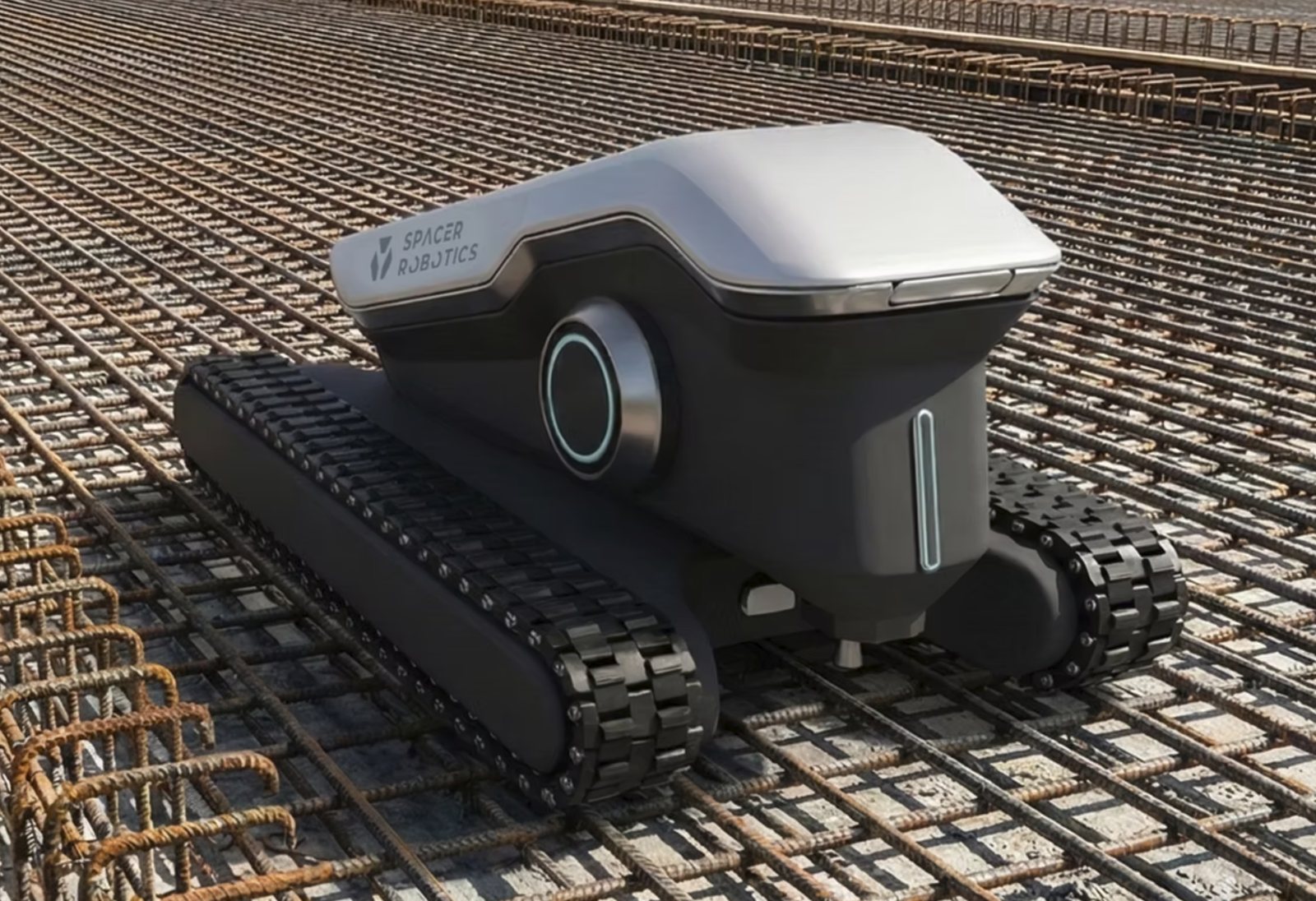
GRID — autonomous rebar-tying robot

GRID — autonomous rebar-tying robot

Spacer Robotics · construction site automation

Problem
Rebar tying is repetitive, slow and physically punishing, and it happens on an unstructured, uneven site rather than in the controlled environment precision hardware is usually designed for.
My role
Consulting engagement covering system requirements, architecture and concept design, and prototyping of core modules for GRID — a mobile robot that operates directly on the rebar grid in job-site conditions.
Outcome
Spacer Robotics reports roughly 5,000 ties per eight-hour shift, on 14+ hours of runtime.
  • Robotics
  • Field Hardware
  • Autonomous Systems
Spacer Robotics
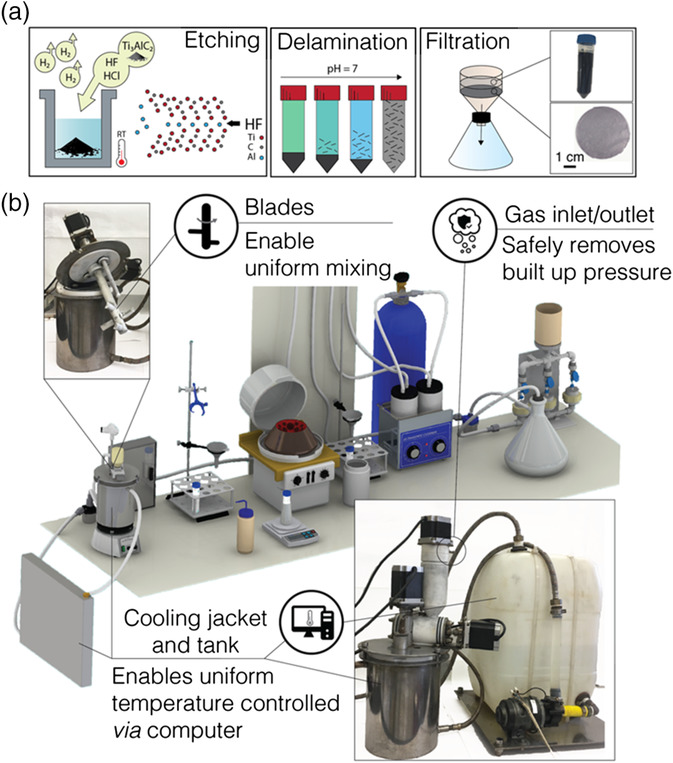
Modular MXene synthesis reactor

Modular MXene synthesis reactor

Materials Research Centre · laboratory to industrial scale-up

Problem
MXene synthesis worked at milligram scale in the lab. Every downstream application — composites, sensors, textiles — was rate-limited by how little material existed.
My role
Designed and scaled a modular synthesis reactor, rebuilding a bench chemistry process as repeatable industrial equipment.
Outcome
From milligram-level lab samples to 100-gram industrial batches.
  • Scale-up
  • Process Equipment
  • Advanced Materials
Read the paper
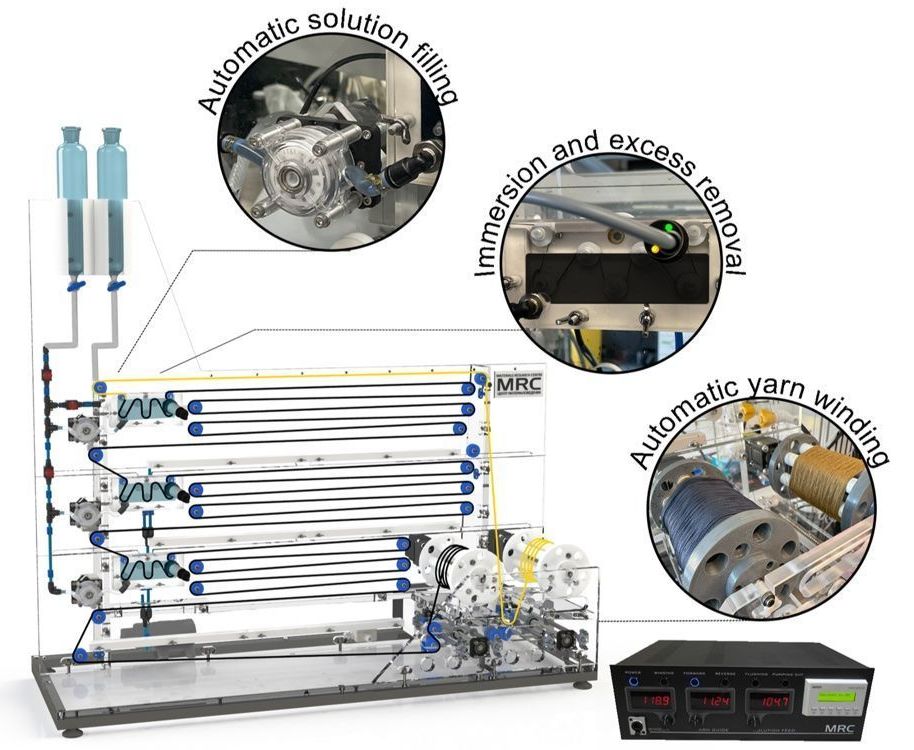
Automated yarn dip-coating platform

Automated yarn dip-coating platform

Materials Research Centre · smart textiles

Problem
MXene-functionalised yarn was a manual batch process, which limited textile applications to laboratory quantities.
My role
Engineered an automated, continuous dip-coating platform for yarn — turning a laboratory technique into a production process.
Outcome
Enabled the first continuous production of MXene smart textiles. The work is published in Advanced Functional Materials.
  • Process Automation
  • Smart Textiles
  • Published Work
Read the paper

Worked with

A3DATLANT 3D
SRSpacer Robotics
MRCMaterials Research Centre
KPIKyiv Polytechnic Institute

Experience

Jun 2022 — Present

ATLANT 3D Nanosystems

Taastrup, Denmark

Mechanical Engineering Group Lead

  • Team Lead Engineering · Jan 2023 — 2024
  • Mechanical Design Engineer · Jun 2022 — Dec 2022

Took ATLANT 3D's Direct Atomic Layer Processing technology from lab to product across three platforms: a benchtop research tool, a space-rated system for in-orbit manufacturing, and an industrial production machine. Led mechanical design and the R&D-to-production transfer for each, and grew the mechanical engineering function into a team.

Key result

Grew the mechanical engineering function from a single role into a group, and set the design review and documentation practice the team now runs on.

  • Atomic Layer Processing
  • R&D to Production
  • Space Hardware
  • Team Leadership

Nov 2025 — Apr 2026

Spacer Robotics

Denmark

Systems Engineering Consultant

Consulting engagement on autonomous construction robotics. Defined the system requirements, developed the system architecture and concept design, and prototyped core modules.

  • Requirements
  • System Architecture
  • Concept Design
  • Prototyping

Dec 2016 — Apr 2022

Materials Research Centre

Kyiv, Ukraine

Mechanical Engineer / System Integrator

Designed and integrated mechanical systems for materials science instrumentation — crystal growth equipment, vacuum and CVD systems, and custom characterisation rigs — alongside the scale-up work that turned laboratory material synthesis into a repeatable industrial process.

Key result

Designed and scaled a modular MXene synthesis reactor from milligram-level lab samples to 100-gram industrial batches.

  • Materials Science
  • Industrial Scale-up
  • Instrumentation
  • System Integration

Publications

2017

Prototype Air-Curtains System Units in Three Different Protection Modes

Conference proceedings

2017

Synthesis and Optical Properties of 2D Carbides MXenes

Conference proceedings

Education

University

National Technical University of Ukraine 'Kyiv Polytechnic Institute'

  • Master of Engineering (MEng) — Mechanical Engineering5.0/5.0
  • Bachelor of Engineering (BE) — Engineering & Material Processing5.0/5.0